Emergency Vehicle Upfitting: What It Is, What It Costs
 By
·
6 minute read
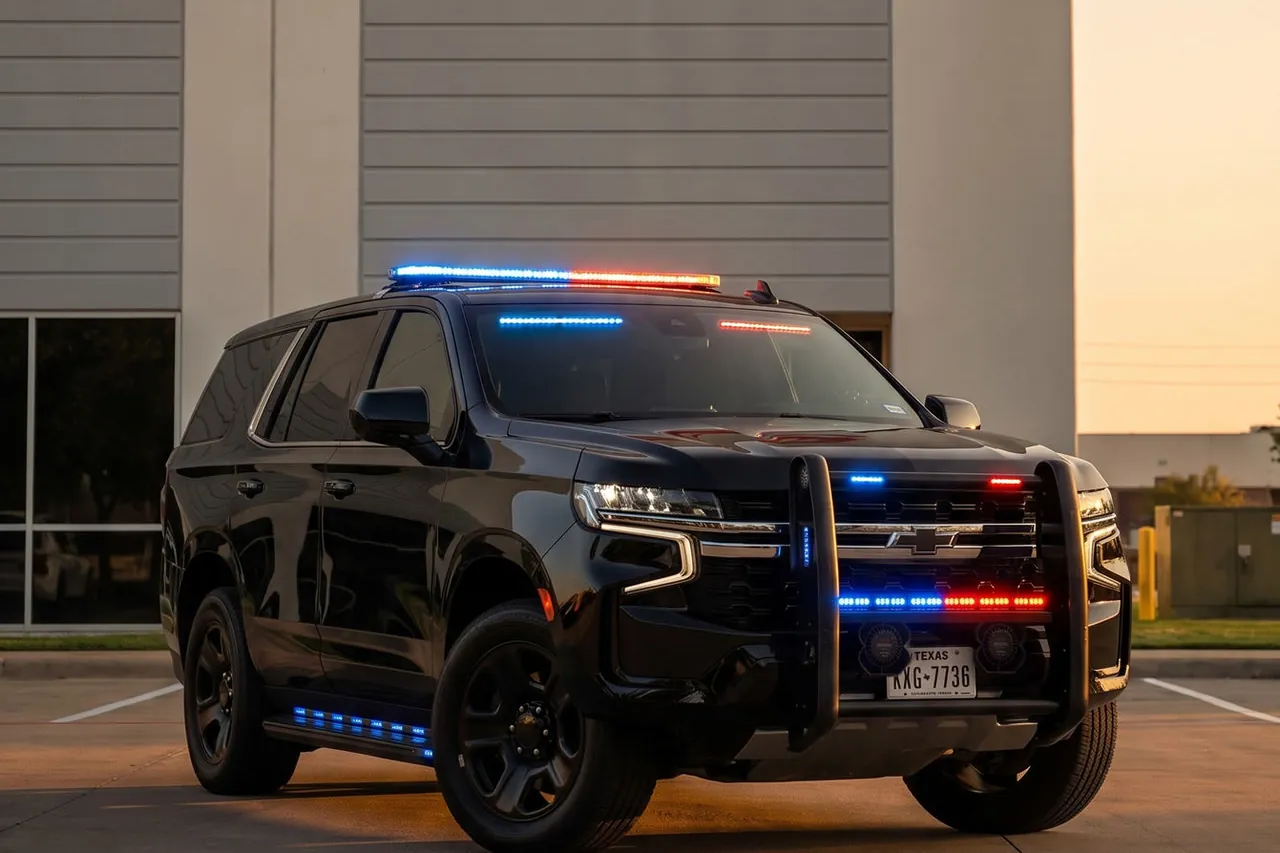
Emergency vehicle upfitting is the work that turns a stock vehicle into a working police car, fire truck or ambulance: the warning lights, the siren and its controller, the partition and consoles, and the wiring and power that run them. In public records from 2025 and 2026, cities paid about $13,000 to $22,000 per police SUV for that equipment and its installation, on top of the price of the vehicle.
Here is what goes into an upfit, what agencies are paying, the standards that apply, and how to choose who does the work.
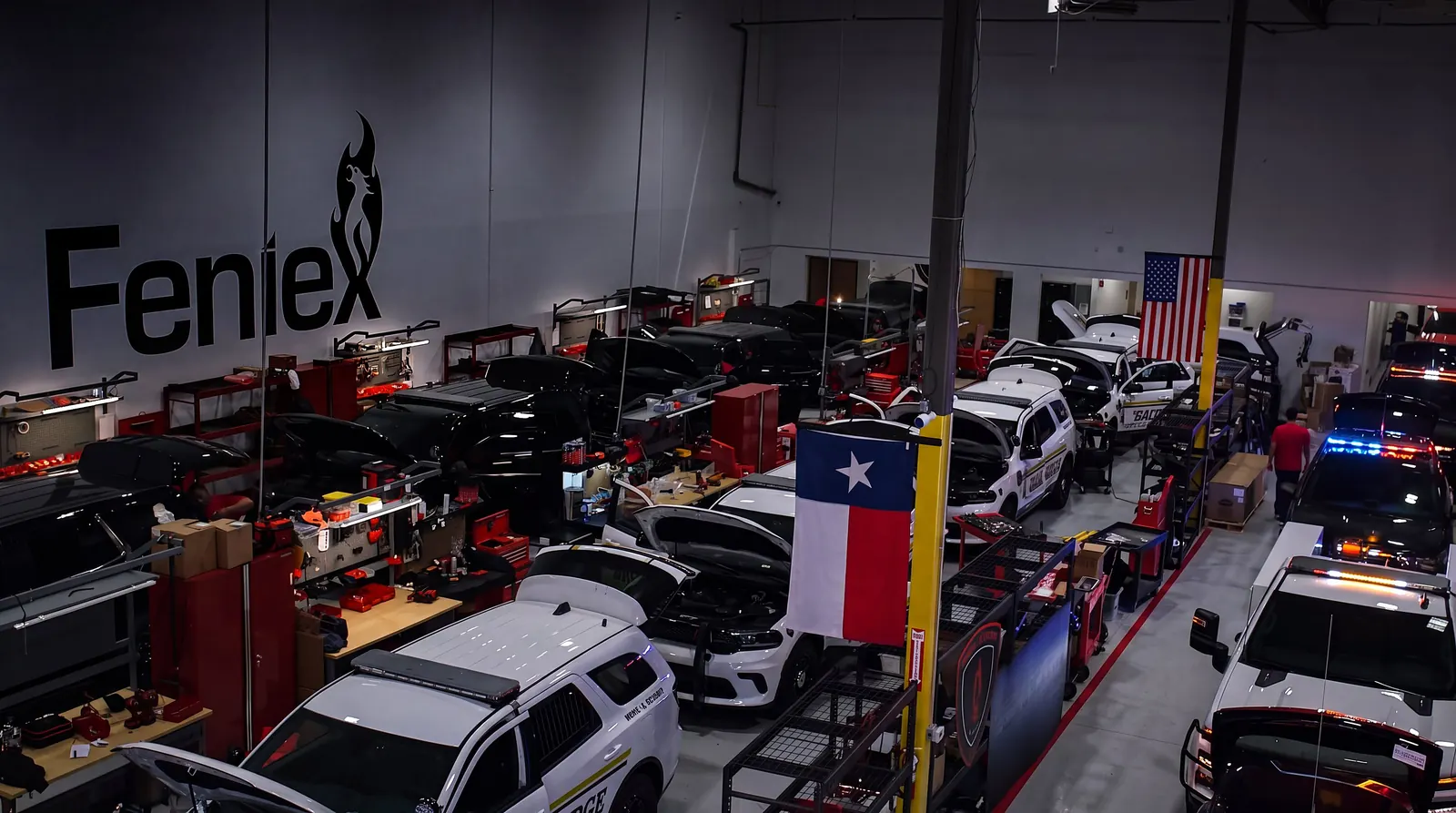
Upfitting turns a stock vehicle into an emergency vehicle
Police-package vehicles leave the factory ready for equipment but without it. GM's 2026 Tahoe police specification guide lists a 250-amp alternator, a second battery and upfitter wiring circuits gathered into two branch harnesses (more in our Tahoe PPV guide). The lights, siren, partition and consoles go in afterward, along with whatever the agency moves over from the car it is replacing.
"Upfitting" and "outfitting" name the same job. Washington State's purchasing contract is called Law Enforcement Vehicle Upfit Equipment, and it describes buyers using that equipment to outfit their vehicles.
The people who do the work are upfitters: shops that install emergency equipment every day. Some fleets build vehicles in their own shops, but every agency in the cost records below hired an outside upfitter, from Groves Emergency in Nebraska to K.E. Rose in Ohio.
Every upfit covers the same five systems
Whatever the vehicle, the build list falls into five groups. The first two are what the public sees and hears. The other three decide whether everything still works at the end of a 12-hour shift.
Warning lights
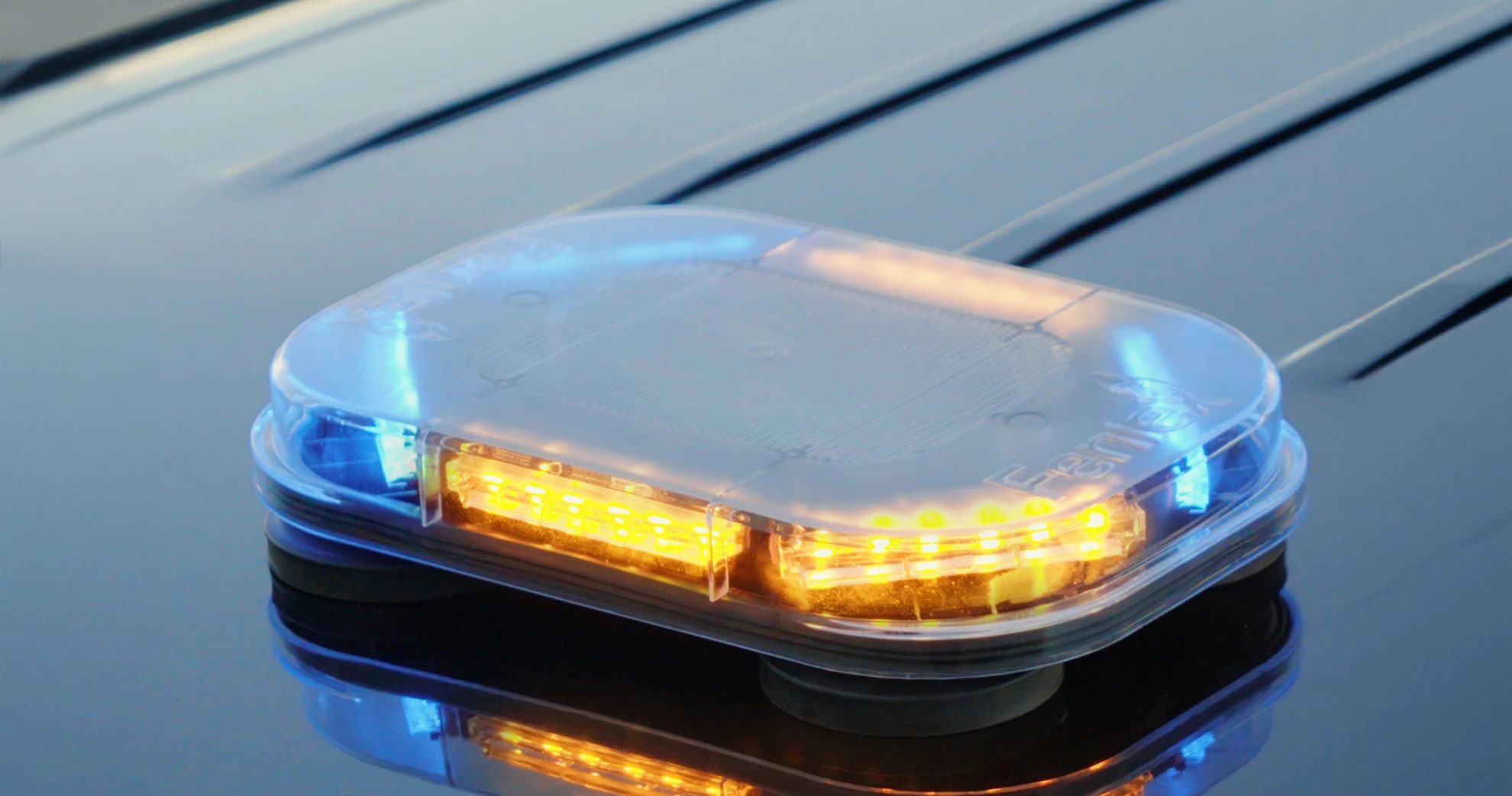
A roof lightbar, or an interior lightbar on a slicktop car, plus perimeter lights in the grille, mirrors, sides and rear. Lightbars can also carry white takedown and alley lights for working a scene.
Controller and siren
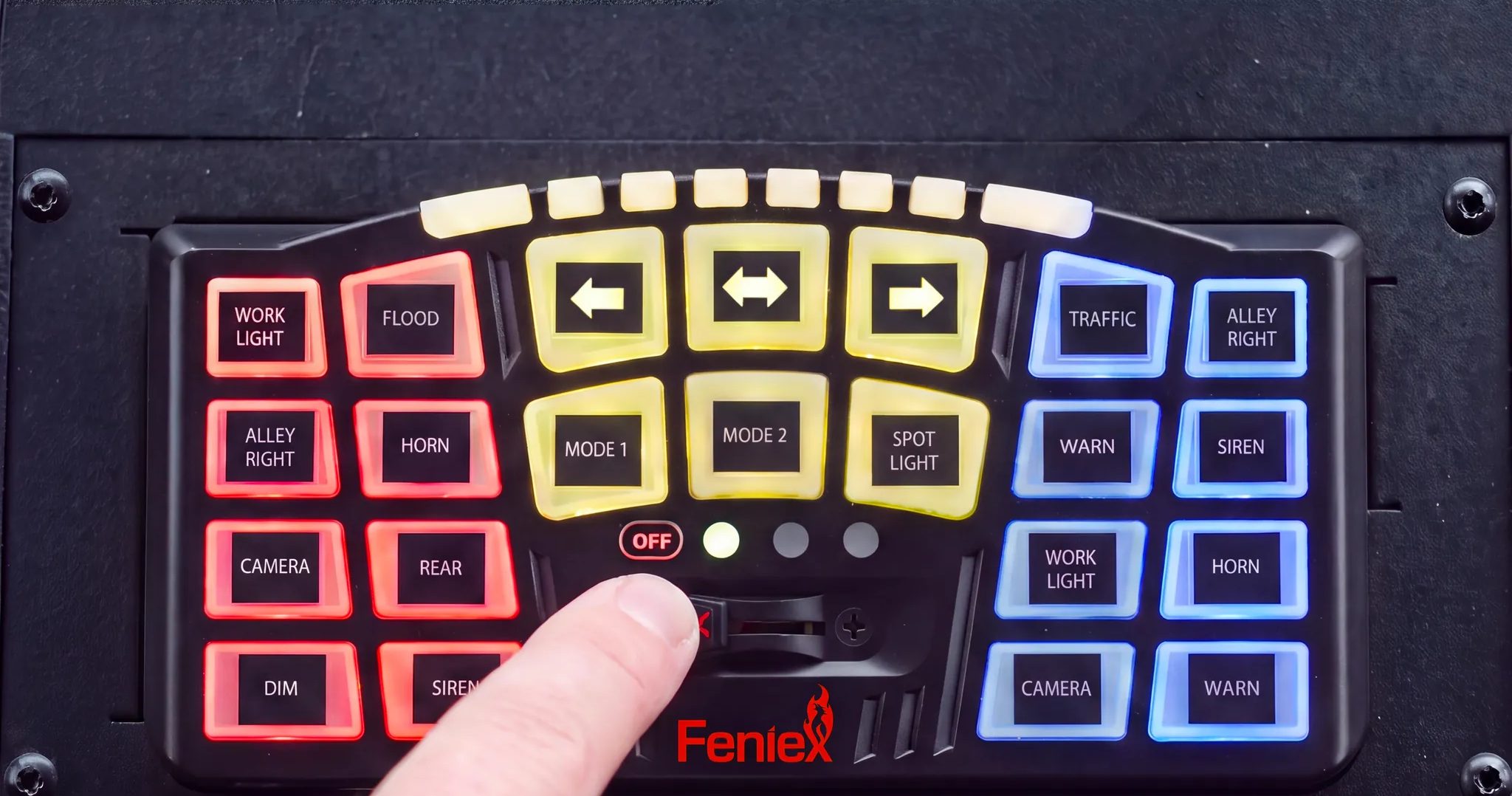
The controller is the switch panel that runs every light pattern and siren tone from the driver's seat. The siren amplifier and speaker produce the tones.
Safety equipment
Prisoner partitions, push bumpers, cargo and weapon mounts, and K-9 inserts. They share the budget with the lights.
Power and wiring
Fused circuits, relays and harnesses sized for every load on the vehicle, connected to the circuits the manufacturer provides for upfitters.
Radio and computer
Two-way radio, antennas, radar and the mount and dock for the in-car computer. Agencies often move the radio and radar over from the car being replaced.
A police SUV upfit costs about $13,000 to $22,000
That is the range across seven public records from 2025 and 2026 in which the price covers the emergency equipment and its installation, with the vehicle bought separately. Most landed between $15,000 and $19,000.
| Agency | Vehicle | What the price covers | Per vehicle | Date |
|---|---|---|---|---|
| Thurston County, Neb. | Chevrolet Tahoe | Lights, sirens and installation, reusing some parts | $13,407 | Jan 2026 |
| Rogers County, Okla. | 2025 Chevrolet Tahoe | Parts and labor | $15,213 | Jul 2025 |
| Hot Springs, S.D. | 2026 Chevrolet Tahoe | The upfit, with the radio and radar moved from the old car; decals extra | $16,355 | Aug 2026 |
| Little Falls, Minn. | 2026 Ford Police Interceptor Utility | Lights, thermal cameras and installation; radios, computer and graphics extra | $16,538 | Jan 2026 |
| South Lyon, Mich. | 2026 Chevrolet Tahoe | Lights, sirens, prisoner and cargo screens, seat inserts, push bumper | $18,871 | Jul 2026 |
| Des Peres, Mo. | 2026 Chevrolet Tahoe | Lightbar, siren, partition, console, computer mount, push bumper and 50 hours of labor | $20,583 | Nov 2025 |
| Vandalia, Ohio | 2026 Ford Police Interceptor Utility Hybrid | The patrol upfit of three new cruisers | $21,970 | Mar 2026 |
Per-vehicle prices from each agency's own minutes, staff memo or bid tabulation, rounded to the dollar; Vandalia's is its three-cruiser total divided by three. Every vehicle was priced separately. These are public bids, not Feniex prices.
Five things move the number:
- The shop. The same build list drew bids of $13,407 and $27,142 in Thurston County, and $18,871 and $28,555 in South Lyon.
- What else is in scope. Little Falls paid $16,538 a vehicle for lights and installation, and about $26,550 once radios, a rugged laptop, a modem, graphics and stop sticks were added.
- What moves over from the old car. Hot Springs reused the radio and radar. Thurston County salvaged some parts.
- Labor. The Des Peres patrol quote included 50 hours of installation at $105 an hour, about $5,250 of its $20,583.
- The year. South Lyon paid $16,803 in September 2025 for the same scope on a 2025 Tahoe, so its 2026 price was 12% higher.
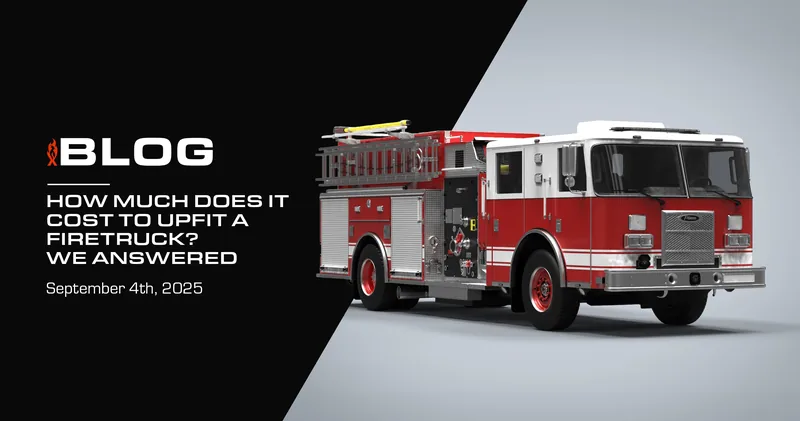
Grants can carry part of it: the Des Peres upfit is reimbursable through Missouri's Blue Shield grant program. Fire and EMS vehicles vary more. When Cheney, Kan., bought a pickup to serve as its fire department's command vehicle, it planned up to $18,000 more for lights, sirens, a topper, a slide-out tray and graphics. For full-size apparatus, see what it costs to upfit a firetruck.
An upfit follows five steps from spec to delivery
-
1. Write the build list
Start from the job: patrol, K-9, supervisor or slicktop. The job decides the lights, the controller, the partition and the consoles.
-
2. Get itemized bids
Send the same list to at least three upfitters, so the quotes can be compared line by line.
-
3. Order with the vehicle
Des Peres ordered its Tahoes in August 2025 expecting January delivery. They arrived on November 16, and the upfit was ordered once they were in hand.
-
4. Install and test
Technicians mount, wire and program everything, then test every light, pattern and siren tone before the vehicle leaves.
-
5. Deliver and train
Officers learn the controller layout before the first shift, so nobody hunts for the siren button on a call.
The Feniex Upfitting Program follows a similar path: spec the vehicle, secure the order, appoint the upfitter, upfit the vehicle, deliver the fleet.
Standards decide which lights a vehicle must carry
Three layers of rules apply, and a good upfitter checks all three before ordering parts.
State law sets the colors
Each state's vehicle code decides which colors each kind of vehicle may show. Our 50-state table shows how tightly those colors are held back from everyone else.
SAE sets the performance
SAE J845 covers 360° and selective-coverage warning lights; SAE J595 covers directional flashing lights. California adds its own rules for emergency warning lamps in Title 13.
NFPA covers fire and EMS
Since January 1, 2024, NFPA 1900 has replaced the separate standards for fire apparatus, wildland apparatus and ambulances. It requires one warning mode for calling for the right-of-way and another for blocking it at a scene.
Ambulances are set state by state. Depending on the state, that means the federal KKK-A-1822 specification, the CAAS Ground Vehicle Standard (version 4.0 since July 1, 2025) or NFPA 1900. Oregon, for example, accepts any of several versions for ambulances built since July 2022. Then check each light's spec sheet: the Quantum® 49” lightbar lists SAE J595, California Title 13 and NFPA among its certifications.
Plan the power before you pick the lights
Every light, the siren and the radio draw from the same electrical system. GM's 2026 Tahoe police vehicle gives the upfitter two 20-amp relays and a 50-amp circuit up front, and a 100-amp circuit in the cargo area, fed by a 760 cold-cranking-amp second battery.
Hybrids and electric vehicles change the plan. Ford's Police Interceptor Utility now comes standard as a hybrid. GM's Blazer EV police vehicle, which Sterling Heights, Mich. runs on patrol, feeds emergency equipment from a dedicated 400-volt to 12-volt converter rated for 100 amps of continuous load. Converted civilian EVs can cost more: one agency told the Justice Department's COPS Office that custom fabrication doubled its upfitting costs on its Teslas.
How to choose an upfitter
Price matters, but the cost records show why the lowest number on paper is not always the cheapest build.
- Get three itemized bids on one build list. Quotes for the same Tahoe ran about twice as high at one shop as another.
- Check that every quote is complete. Vandalia passed on a $59,724 quote for three cruisers because it left out items expected to cost more than $4,200, and chose the complete $65,911 quote.
- Ask about certification. The EVT Certification Commission tests law enforcement vehicle installation technicians.
- Ask how they connect to the vehicle. The answer should be the manufacturer's upfitter circuits, with each load on a circuit rated for it.
- Ask what moves over from the old car, and get the labor hours in writing.
Feniex runs its own upfitting program. An upfit specialist helps you define the loadout, equipment and fleet pricing go on a single purchase order, and Feniex matches you with a certified installer partner near your fleet, managing the build from spec to delivery.
Where upfits go wrong
A partition in the airbag zone
GM's Tahoe police guide says barrier ends behind the front seats must stay out of the side airbag deployment zones, and the airbag sensors must never be moved to make room for equipment.
A load bigger than its circuit
A Quantum® 49” lightbar can draw 20 amps by itself, the full rating of one of the Tahoe's front relays. Put anything else on that relay and it runs past its rating.
The low quote that isn't
A quote missing parts looks cheaper until the change orders arrive. Compare quotes line by line against the same build list.
Planning an upfit? Tell the Feniex upfit team what you are building, or lay out the lights first in Build-A-Car.