Is It Illegal to Have Blue Lights on Your Car?
 By
·
9 minute read
By
·
9 minute read
Yes. In every state it is illegal for an ordinary driver to run flashing blue lights on a car, and red lights facing forward are banned almost everywhere too. Blue is kept for police and a short list of other authorized vehicles. In 32 states the light doesn't even have to be on: having it installed is the offense, and in seven of them, so is carrying one in the car.
Below is what each state allows for blue, red, flashing and amber lights, what a first offense costs, and the few exceptions that let civilians run a warning light legally.
Blue lights are off-limits to ordinary drivers in every state
Blue is the most tightly held warning color. Most states give it to police alone. A few share it with others: New York lets a volunteer firefighter run one blue light with the chief's written authorization, and Texas lets the highway, utility and tow vehicles covered by its move-over law carry flashing blue. None of them extends it to an ordinary driver.
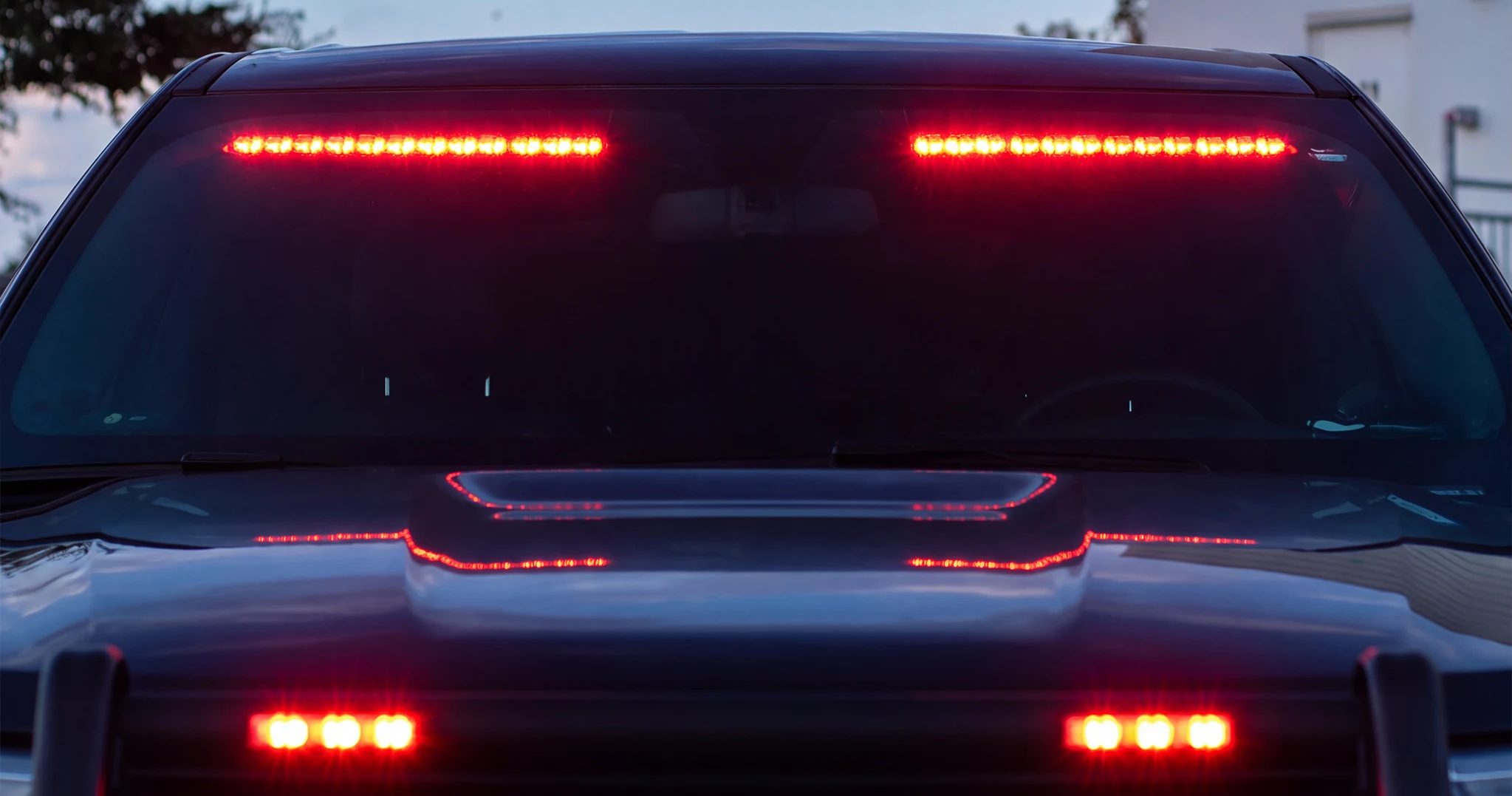
Red is nearly as restricted. Almost every state bans a red light that shows to the front of a private car, and flashing red belongs mostly to emergency vehicles and school buses. The gaps are narrow: a handful of codes, including Georgia's and Pennsylvania's, don't clearly address a steady red lamp, and each still restricts flashing red.
In 32 states, a light that's switched off still counts
Many drivers assume a light is legal as long as it stays off. In most states it isn't. The laws are written against equipping a vehicle, not just using it:
- Illinois bans blue flashing lights "whether lighted or unlighted."
- Texas counts a lamp as equipped whether it is attached "temporarily or permanently" and whether or not it is switched on, so an unlit dash-mounted light counts.
- Georgia bans driving a vehicle "equipped with or containing" a device that can produce blue light.
- Michigan bans the "use or possession" of flashing lights of any color, and North Carolina makes simply possessing a blue light a crime, with narrow exceptions such as dealers' stock.
Covering it may not help either. Virginia and Michigan write exceptions for certain lights that are both covered and unlit, but we found no such exception in most of the laws below.
The rules in all 50 states
Each row sums up what a privately owned car may show, based on the state's current vehicle code. "Even installed and off" means the law is broken by having the light mounted, whether or not it is switched on. Where a state's code doesn't answer a question, the cell says so rather than guessing.
| State | Blue | Red | Flashing or strobe | Amber | First offense | The law |
|---|---|---|---|---|---|---|
| Alabama | No; using one is banned | No red to the front | Not authorized, though no express ban | Only state-designated vehicles | Misdemeanor: up to $100 or 10 days | §32-5A-115 §32-5-241 |
| Alaska | No | No red to the front | Banned, except signals and hazards | Only listed work vehicles | Infraction: $60 and 2 points | 13 AAC 04.100 13 AAC 04.145 |
| Arizona | No; front lights must be white or amber | No, even installed and off | Banned, except signals and hazards | Hazard warnings only | Civil violation: up to $250 plus surcharges | A.R.S. §28-947 |
| Arkansas | No, even carried in the car unless still sealed | No; a mounted one counts as displayed | Banned, except signals and hazards | Road work, tow trucks and state-approved vehicles | Blue: Class A misdemeanor; other colors $10–$100 | §27-36-301 §27-51-905 |
| California | No, even installed and off | No; front lights must be white or yellow | Banned, except signals and hazards | Listed work vehicles, only at a hazard | Infraction: up to $100 | Veh. Code §24003 §25250 |
| Colorado | No, even carried in the car (street rods may use blue-dot taillights) | No, even carried in the car | No blanket ban; each color is restricted | Only designated service vehicles | Red or blue: class 2 misdemeanor (up to 120 days) | C.R.S. §42-4-238 |
| Connecticut | No; front lights must be white, yellow or amber | No red to the front | Banned, except signals and hazards | DMV permit ($20 a year) for listed vehicles | Infraction: $92 | §14-96p §14-96q |
| Delaware | No flashing blue; steady blue not addressed | No red to the front | Banned, except signals and hazards | Hazard warnings; other uses need state approval | $10–$28.75 | 21 Del. C. §4353 |
| Florida | No, even installed and off | No red or blue to the front | Banned, except signals and hazards | Only listed work, escort, security and funeral vehicles | $30 base ticket; flashing blue is a misdemeanor | §316.2397 §843.081 |
| Georgia | No, even carried in the car (antique cars may have 1-inch blue in taillights) | Flashing red needs a state permit; steady red not addressed | Restricted by color; white not addressed | Only listed vehicles; no permit since 2024 | Misdemeanor | O.C.G.A. §40-8-90 DPS light permits |
| Hawaii | No, even carried in the car | Fails inspection; banned in Honolulu | Banned in Honolulu; other counties not checked | Honolulu: listed work vehicles only | Blue: up to $1,000 and 1 year | HRS §291-31.5 |
| Idaho | No; only police may display blue | No red to the front | Banned, except signals and hazards | Yes, but only to warn of a hazard | Infraction: up to $300 | §49-910A §49-928 |
| Illinois | No, lit or unlit | No, lit or unlit | Banned, except signals and hazards | Only listed work vehicles | Class A misdemeanor | 625 ILCS 5/12-215 5/12-212 |
| Indiana | No lit blue light; red-and-blue combos must come off | No flashing red; steady red not addressed | Banned, except signals and hazards | Hazard warnings only | Infraction: up to $500 | IC 36-8-12-11 IC 9-21-7-11 |
| Iowa | No; using one is banned | No red to the front | Banned, except signals and hazards | Only listed work vehicles | $45 fine ($30 for red to the front) | Iowa Code §321.423 §321.422 |
| Kansas | No; front lights must be white or amber | No, even installed and off | Banned, except signals and hazards | Hazard flashers only | $45 fine | K.S.A. 8-1729 |
| Kentucky | No, even installed and off | No red to the front, flashing or steady | Banned, except signals and hazards | Only listed public-safety vehicles | $100–$1,000, and the lights are forfeited | KRS 189.950 KRS 189.040 |
| Louisiana | No, even installed and off | No red to the front | Banned, except signals and hazards | Hazard use only; tow trucks by rule | Up to $175 or 30 days | R.S. 32:318 R.S. 32:327 |
| Maine | No, even installed and off | No, even installed and off | Added lights must burn steady | Listed work vehicles, including private plow trucks | Traffic infraction: $25–$500 | 29-A M.R.S. §2054 §1909-B |
| Maryland | No, even installed and off | No red to the front | Needs state (MVA) authorization | Service vehicles, with free MVA authorization | Up to $500; license can be suspended 30 days | Transp. §22-218 |
| Massachusetts | No flashing blue, even mounted and off | No flashing red, even mounted and off | Banned, except signals and hazards | Listed work vehicles; anyone else needs a Registrar permit | $100–$300 | c. 90 §7E c. 90 §7 |
| Michigan | No, even carried: possessing a flashing light of any color is banned | No; front lights must be white or amber | Banned, even to possess | Only listed work vehicles | Civil infraction: up to $100 | MCL 257.698 |
| Minnesota | No, even installed and off (1-inch blue dot allowed in motorcycle and collector brake lights) | No, even installed and off | Banned, except signals and hazards | Service vehicles at a scene; private cars as a hazard warning only | Petty misdemeanor: up to $300 | Minn. Stat. §169.64 |
| Mississippi | No; using or displaying one is banned (antiques and street rods may have blue taillights) | No red to the front | No general ban found; colors restricted | Wreckers and emergency work vehicles | Misdemeanor: $50–$500 | §63-7-20 |
| Missouri | No; it takes a permit ordinary drivers can't get | No red to the front | Alternating flashers banned | Only highway-department, work-zone and utility vehicles | Blue: class A misdemeanor (up to 1 year) | RSMo 307.175 RSMo 307.100 |
| Montana | No; blue lenses count too (street rods may use blue-dot taillights) | No red to the front | Banned, except signals and hazards | Only listed work vehicles | Misdemeanor: $10–$100 | MCA 61-9-402 61-9-226 |
| Nebraska | No flashing or rotating blue; steady blue not addressed | No red to the front | Banned, except listed uses | Only listed work vehicles | Class III misdemeanor, and the light must come off | §60-6,230 §60-6,234 |
| Nevada | No (motorcycles may have a 1-inch blue taillight insert) | No red to the front | No single ban; restricted by color | Mounting needs a Highway Patrol permit; private cars at a hazard only | Civil infraction: up to $500; police destroy the lights | NRS 484A.480 NRS 484D.185 |
| New Hampshire | No, even installed and off | No, even installed and off | Restricted by color; added light bars stay off while driving | Listed work vehicles, including private plows | $250; license can be suspended | RSA 266:78-b 266:78-h |
| New Jersey | No, even installed and off | No, even installed and off | Banned, except signals and hazards | MVC permit ($25) for listed work vehicles; not private cars | $55 ticket | N.J.S.A. 39:3-50 39:3-54 |
| New Mexico | No flashing blue; steady blue not addressed | No red to the front | Banned, except signals and hazards | Hazard use; tow trucks only while clearing a scene | $50 penalty assessment | NMSA §66-3-835 |
| New York | No, even mounted and off | No, even mounted and off | Banned, except signals and hazards | Listed hazard vehicles; private cars only when disabled | Up to $150 or 30 days | VTL §375 |
| North Carolina | No, and possessing one is a crime | No; installing one is a crime | No general ban; red and blue banned | Any car may carry one, but can't flash it while moving | Class 1 misdemeanor | G.S. 20-130.1 20-130.2 |
| North Dakota | No flashing blue; steady blue not addressed | No red to the front | Banned, except signals and hazards | Wreckers, mail and farm vehicles; others need local approval | $20 fee | N.D.C.C. §39-21-26 |
| Ohio | No flashing blue; steady blue fails inspection | No flashing red; steady red fails inspection | Banned, except signals and hazards | Only listed vehicles | Minor misdemeanor: up to $150 | ORC 4513.17 |
| Oklahoma | No, even installed and off | No, even installed and off | Banned, except signals and hazards | Only listed vehicles | Misdemeanor: up to $2,000 or 6 months | 47 O.S. §12-227 |
| Oregon | No, even installed and off (pre-1959 cars may have a 1-inch blue taillight insert) | No red to the front | Banned, except signals and hazards | Only listed work vehicles | $165 presumptive fine | ORS 816.350 |
| Pennsylvania | No, even installed and off (motorcycles may add blue-dot lighting) | No flashing red; steady red not addressed | Emergency-style flashers banned | Only designated vehicle types | $500–$1,000 for emergency-style lights | 75 Pa.C.S. §4571 §4572 |
| Rhode Island | No, even installed and off | No red to the front | Banned, except signals and hazards | DMV permit ($25) for listed vehicles | $100 fine | §31-24-31 |
| South Carolina | No, and possessing one visible from outside is illegal | No, even when switched off | Banned, except signals and hazards | No general list; statutes unclear | Misdemeanor: up to $100 or 30 days | §56-5-4700 |
| South Dakota | No; using one is banned (motorcycles may have a 1-inch blue brake-light dot) | No red to the front | No general ban found | Only listed vehicles; private cars not addressed | Class 2 misdemeanor: up to $500 or 30 days | SDCL 32-17-42 32-17-9 |
| Tennessee | No, even installed and off | No red to the front | No flashing lights facing forward | Only listed work vehicles | Class C misdemeanor: up to $50 or 30 days | TCA §55-9-414 §55-9-402 |
| Texas | No flashing blue, even off or dash-mounted | No red to the front | Red, white and blue flashers banned | Hazard lamps; beacons on private cars not addressed | Misdemeanor: $1–$200 plus a $50 state fine | Transp. Code §547.305 |
| Utah | No, even installed and off | No, even installed and off | Banned, except signals and hazards | Only road work, tow and escort vehicles | Infraction: up to $750 | §41-6a-1616 |
| Vermont | No, even installed and off | Not without a permit, and civilians don't qualify | Banned, except amber | Not barred; no permit needed | Civil violation: up to $1,000 | 23 V.S.A. §1251 §1254 |
| Virginia | No, even unlit unless covered | No | Only listed vehicles; hazards when stopped | 28 listed uses, including emergency snow removal | Infraction: up to $250 | §46.2-1020 §46.2-1022 |
| Washington | No, even mounted and off | No red to the front | Banned, except signals and hazards | Only listed work vehicles, while working | Infraction: up to $250 plus assessments | RCW 46.37.280 WAC 204-21-230 |
| West Virginia | No, even installed and off | No red to the front | Banned, except signals and hazards | Listed vehicles, authorized by the sheriff | Misdemeanor: up to $100 or 10 days | §17C-15-26 |
| Wisconsin | No, even installed and off | No red to the front | Banned, except signals and hazards | Only listed vehicles, including heavy trucks | Forfeiture: $10–$200 | §347.25 §347.07 |
| Wyoming | No, even installed and off | No, even installed and off | Banned, except signals and hazards | Only listed vehicles | Misdemeanor: up to $200 | §31-5-928 |
Checked against each state's official code, or a mirror where the official site was unavailable, in September 2026. "Signals and hazards" means turn signals and factory hazard flashers. Laws change, so confirm with your state's code or motor vehicle agency before you buy or install anything. This is general information, not legal advice.
Amber is the one warning color civilians can sometimes use
Amber, or yellow, is a caution color, and it's where the rules loosen. Most states let listed work vehicles run flashing amber: tow trucks, snowplows, utility and road crews, rural mail carriers and, in some states, security patrols. A few states go further:
- Idaho lets any vehicle carry a flashing amber light to warn of a hazard.
- Vermont doesn't treat all-amber flashing lamps as emergency lights, so they need no permit.
- North Carolina lets any vehicle be equipped with an amber warning light, but it can't flash while moving outside listed situations.
- Connecticut, Massachusetts, New Jersey and Rhode Island run permit systems for amber, and Massachusetts's is open to vehicles beyond its listed work classes.
In most states the light is lawful only while it's doing its job: plowing, towing, working the roadside. If you run a work or plow truck, a Beacon AM600 ordered in amber mounts permanently or by magnet, and an amber mini lightbar gives more coverage. Check your state's row first.
Using the lights to pull someone over is a felony in many states
The ticket for having the wrong light is small in most states. Using it to act like the police is not:
- In Florida, showing red or blue to the front and using it to stop, or try to stop, another vehicle is a third-degree felony.
- In Illinois, stopping or detaining someone with unauthorized warning lights is a Class 2 felony, punishable by 3 to 7 years.
- In North Carolina, using an operating blue light to make a driver yield or stop is a Class H felony.
- In Georgia, using a vehicle with blue lights to commit a felony carries at least a $1,000 fine or a year in prison, or both.
States also punish impersonating an officer. In Texas, pretending to be a public servant to make someone submit is a third-degree felony carrying 2 to 10 years.
Collectors, motorcycles, parades and volunteers have narrow exceptions
A few carve-outs let civilians show a warning color legally:
- Blue-dot taillights. Several states allow a small blue insert, usually up to 1 inch, in the taillights of street rods, custom or antique cars, or motorcycles: Colorado, Georgia, Maine, Minnesota, Mississippi, Montana, Nevada, Oregon, Pennsylvania and South Dakota among them.
- Parades and shows. New Hampshire lets vehicles in a parade or celebration display emergency or warning lights. South Carolina exempts collector vehicles used only for club events, exhibits, tours and parades from its blue and red rule. Tennessee allows privately owned antique police cars to light up at community events and parades with the local police chief's written authorization.
- Volunteers. Many states let volunteer firefighters and EMS members run lights on their own vehicles with authorization. See our state-by-state guide to volunteer firefighter lights.
Some states police the sale, too. Michigan bars selling flashing red or blue emergency lights to anyone outside the listed groups, Missouri requires a buyer to sign an affidavit that an emergency light will be used only on an emergency vehicle, and Louisiana bans selling a dash, hood, grille or roof-mounted emergency light that glows blue to anyone.
How to stay legal with warning lights
- Find your state in the table and read the law it links to.
- Keep blue and red off any vehicle that isn't an authorized emergency vehicle. Don't count on unplugging or covering them.
- If your work needs warning lights, look at amber, and check whether your state lists your kind of vehicle or issues a permit.
- If you volunteer, get your chief's authorization in writing before you install anything.
Want to know why the colors are split this way? Read why police lights are red and blue and what every emergency light color means. To match legal lights to your vehicle, find an authorized Feniex dealer.